Expert Access Challenges in European Market Expansion Projects
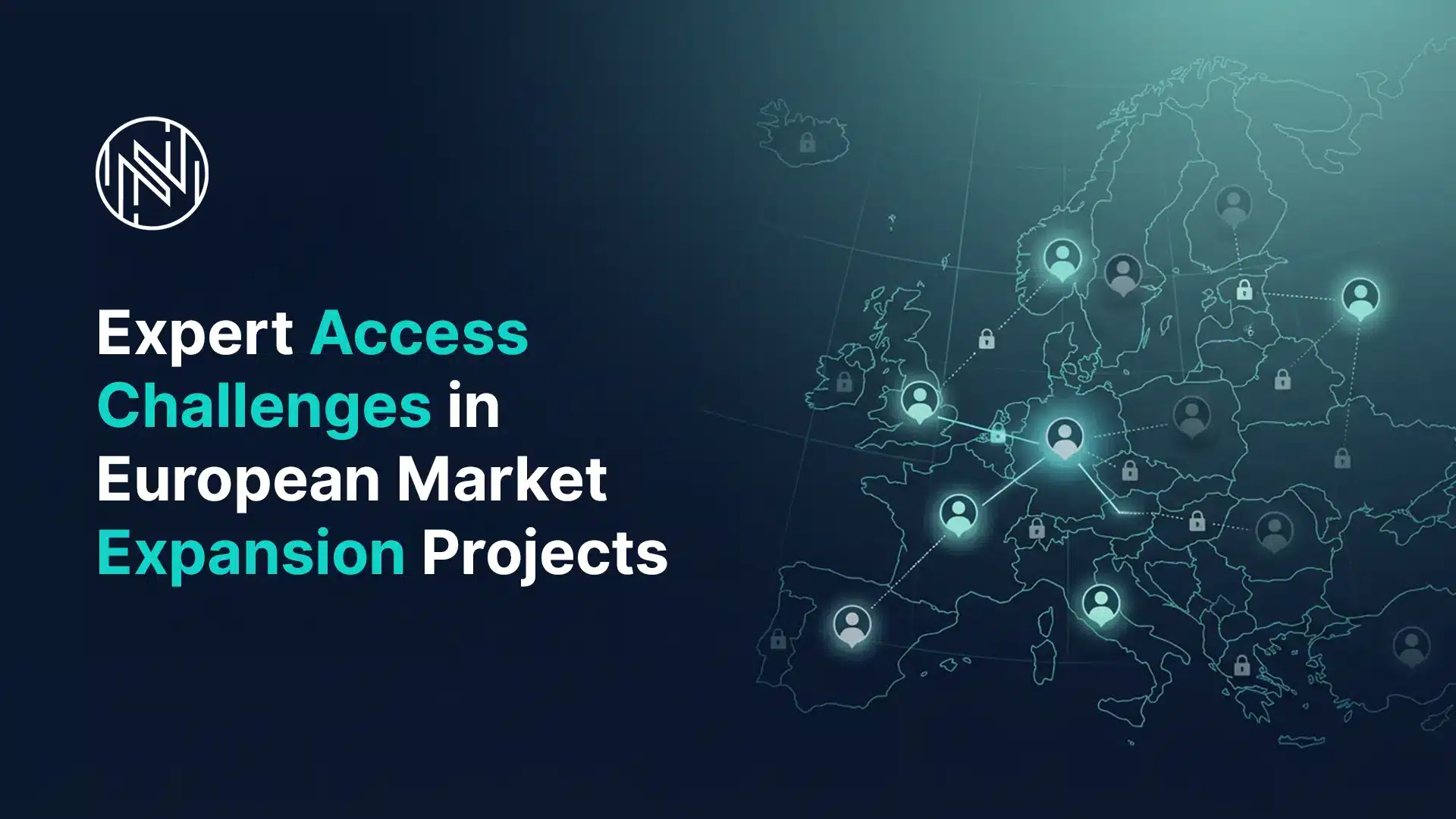
Expert access issues in European market expansion projects arise from the extreme fragmentation in 27+ countries with different regulatory structures, languages, and business cultures. Key barriers are a tight talent market for specialized roles, lengthy hiring timelines, complex compliance requirements, and a need for local market expertise to navigate through different reimbursement and regulatory systems. Companies should start the mapping of critical hires and expert requirements 12-18 months before entering the market.
Why Access to Expertise Is the Silent Barrier to Expansion into the European Market
Expanding into Europe is one of the most strategic expansion moves a business can make. But to many decision-makers, VCs, startups, and SMEs, the reality is far more complex than one would have thought. One challenge stands out from the rest – finding and accessing the right experts.
From Berlin to Barcelona, London to Ljubljana, every country has its own regulatory environment, its own business culture, and its own talent ecosystem. This extreme fragmentation makes expansion across the European market much more challenging than it does in a single, united market such as the US.
Whether you are conducting Europe market entry research, testing a product hypothesis, or building a compliant local team, you will almost certainly require access to local specialists. And that access is rarely that simple.
The Basic Expert Access Challenges to Determine the European Market Expansion
Talent Shortage and Strong Competition
One of the biggest expert access challenges in Europe is a lack of specialized talent, with overwhelming levels of shortage. Sectors including biotech, oncology, rare diseases, digital health, and advanced manufacturing require experts who are technically proficient but also very familiar with the nuances of the European market.
These hard-to-reach experts are already embedded within established organizations, academic institutions, or regulatory bodies. Competing for their time and insight without an established brand locally makes the new entrant’s job even more difficult.
Long Hiring Gaps and Stiff Employment Regulations
Hiring processes in Europe are often lengthy and complicated due to rigid local labor laws and regional employment regulations. Unlike markets where jobs are at-will, most European countries mandate detailed contracts, statutory notice periods, and compliance that is relevant to the specific sector of the industry.
For startups and small-to-medium enterprises operating on a lean business model, prolonged timeframes may block cross-border market research in Europe as well as delay go-to-market strategies by months.
The High Price of Local Expertise
Access to local industry specialists in Europe is not cheap. For companies without an established local presence, the cost of engaging specialized consultants or advisors in areas such as GDPR compliance, reimbursement advisory, or regulatory approval can be prohibitive.
This puts them on an uneven playing field. Larger corporations are able to absorb these costs. Meanwhile, growth-stage startups and SMEs are often at a disadvantage of not knowing what they need to know and being unable to afford what they can access, thus having a direct effect on B2B research in European markets.
Dealing with the Nuances of Local Markets
A generalized ‘European’ approach to market entry never succeeds. Regional market differences in Europe are deep. A pricing and reimbursement approach that is effective in Germany will not necessarily be effective in France or Spain. A regulatory pathway accepted in the UK post-Brexit is on an entirely different track from one in the EU.
Successful cross-border consulting requires having experts who have detailed knowledge of the healthcare system, procurement system, and barriers to market entry in each country. Without this, companies risk wasting capital on strategies that are based on erroneous assumptions.
Information Asymmetry and Network Imbalances
Many companies greatly underestimate the amount of time needed to identify key opinion leaders (KOLs), regulatory advisors, and industry experts in Europe. Without the right network, businesses will end up using outdated intelligence or secondary sources that fail to reflect the current market realities.
This information asymmetry is especially perilous in areas where European regulatory research challenges are coupled with exploding policy changes, such as the EU Medical Devices Regulation (MDR) and an ever-changing landscape of EU compliance regulations (GDPR).
Expert Access Challenges At A Glance
| Challenge | Impact | Sectors Most Affected | Risk Level |
| Talent Scarcity | Delayed hiring, knowledge gaps | Biotech, Pharma, MedTech | 🔴 High |
| Long Hiring Timelines | Go-to-market delays | All sectors | 🔴 High |
| High Cost of Expertise | Budget overruns | SMEs, Startups | 🟠 Medium-High |
| Local Nuances | Strategy misalignment | Healthcare, Finance, Tech | 🔴 High |
| Information Asymmetry | Poor market intelligence | All sectors | 🟠 Medium-High |
| Multilingual Barriers | Communication breakdowns | All sectors | 🟡 Medium |
Country-Specific Expert Sourcing Challenges
Not all European markets have the same difficulties in terms of access. Here is a short summary of the unique challenges facing businesses in the key markets:
- Expert recruitment in Germany: As Germany’s engineering and pharmaceutical talent pool is deep but highly competitive, recruiting experts is extremely important. Experts are in demand in all places in the world, which means that local market knowledge in Germany isn’t easily found.
- Industry experts in France: Due to the centralized system of healthcare and regulation in France, experts tend to be concentrated in certain agencies and institutions, which means having strong pre-existing networks.
- Market research experts in the UK: Post-Brexit regulatory divergence creates a new layer of complexity. UK experts are now in the unenviable position of having to manage both MHRA and EMA frameworks, which adds more demand but also more shortages.
- Expert sourcing in Italy and Spain: These markets have solid regional variation. An expert in Milan might have limited knowledge about Naples; hyper-local specialization is an important aspect.
- Nordic market expansion research: The Nordics are innovation-friendly but small in population. Expert communities are close-knit, and there are only real introductions through trusted networks to break through the door.
Ways to Overcome Expert Access Challenges in Europe
Start Early: Map Critical Hires 12 – 18 Months Ahead
The best way to overcome the expert access challenges for market expansion is to start the process a long time before you need the expertise. Primary research in Europe is time-consuming. Regulatory consultations, KOL identification, and advisory board formation are not something that can be rushed through without consequence.
Companies that start to map out their requirements for experts 12 to 18 months before entering the market regularly report smoother regulations, improved commercial outcomes, and fewer compliance surprises.
Use of Expert Networks in Europe
Collaborating with existing networks of experts in Europe is a pre-existing channel to finding the right people. These networks keep up-to-date databases of vetted professionals in a range of sectors, geographies, and languages, significantly cutting the time and cost of accessing experts across industries in Europe.
Platforms such as Nexus Expert Research specialize in placing businesses with the exact right experts to help them expand into the European market. Whether you are searching for a GDPR compliance advisor in Amsterdam, a rare disease KOL in Paris, or a reimbursement strategist in Munich, having a trusted network means that you will be able to shorten the search time from months to days.
Regulatory Expertise on the Priority
Given the complexity of EU compliance rules and the implications of the GDPR, for GDPR and expert interviews, and data collection, regulatory expertise has to be built into your expansion strategy from day one. This is particularly true for the healthcare, fintech, and edtech industries, where each country’s law directly influences what you are able to do and how you can do it.
Build for Multilingual Research Capacity
Conducting multilingual research challenges is one of the most underestimated features of European expansion. Survey instruments, interview guides, and regulatory submissions often must be modified, not merely translated, for each market. Employing the services of experts who work in the country in each linguistic and cultural context is critical to obtaining sound intelligence.
Invest in Employer Branding
For companies intending to stay long term, investing in European business intelligence, along with employer branding, in advance target markets to build credibility in order to plan and recruit the right local talent over time. This approach works best when it is combined with short-term engagement from expert networks to bridge short-term knowledge gaps.
Recommended Strategies by Type of Business
| Business Type | Top Priority | Recommended Approach |
| Startups | Speed to insight | Expert networks for rapid KOL & advisor access |
| SMEs | Cost-effective expertise | Local partnerships + targeted expert engagement |
| VCs / Investors | Due diligence accuracy | Primary research with vetted European specialists |
| Enterprise / Decision-Makers | Scalable intelligence | Employer branding + expert network integration |
The Role of SMEs Access in European Expansion Projects
Small and medium-sized enterprises are put in a dilemma regarding European expansion. They do not often have the internal resources to carry out the rigorous SME access for European projects on their own, but neither can they afford to stumble along the way from failure to not knowing the local landscape well enough to set foot on the ground.
For SMEs, the most pragmatic solution is through structured cross-border consulting via specialist intermediaries who already have established access to regional expert services. This model enables SMEs to punch above their weight in terms of access to the same quality of intelligence as those held by large enterprises without the overhead.
How Nexus Expert Research Helps to Address these Challenges
The problems of negotiating the complexities of access to European expertise are too complex for a simple database of names. It requires a partner with a good understanding of the commercial, regulatory, and cultural dynamics of each target market.
Nexus Expert Research is designed and built for this challenge. With a network of well-vetted experts across all sectors of healthcare, technology, finance, and industrial markets across all major European markets, Nexus Expert Research works to connect decision-makers to the precise intelligence they need quickly, compliantly, and cost-effectively.
Whether you are in need of market research experts in the UK post-Brexit, rare disease advisors in Germany, or reimbursement strategists across the Nordic markets, Nexus Expert Research offers the structured access that turns ambiguity into actionable insight.
Final Thoughts
The barriers to expansion in the European market are real but not insurmountable. For businesses that approach the challenge strategically, investing in local market expertise in Europe, getting in early, and working with the right networks, Europe is an extraordinary commercial opportunity.
The companies that succeed are not necessarily the largest or the best-capitalized. They are the ones that ask the right questions, find the right experts, and act on reliable intelligence. That is what European business intelligence looks like.
Ready to reach the right European people fast? Connect with Nexus Expert Research today and turn your market entry intelligence from imprecision to a winning advantage.
