
How Does the Wholesale Energy Market Work?
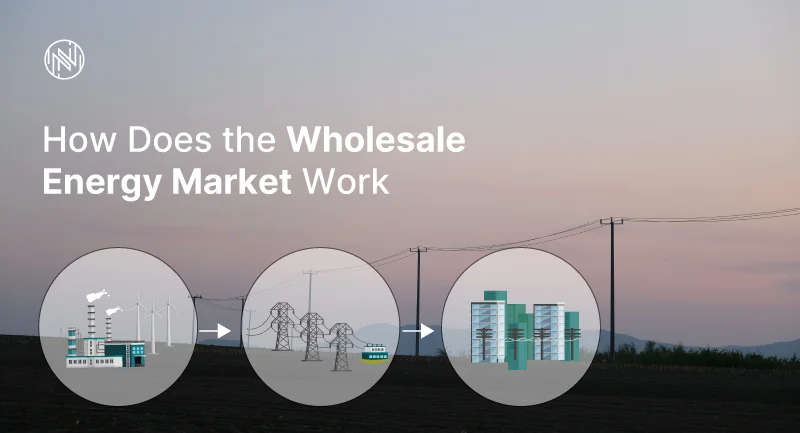
The wholesale energy market is a large-scale marketplace where power generators sell electricity to retailers and major consumers, never directly to individual homes. Organized exchanges ensure transparent pricing and operational efficiency. Systems like day-ahead markets and auctions help balance supply and demand. These systems often use a merit order approach, prioritizing the cheapest sources first, and incorporate risk management tools to address price swings. The market includes both physical and financial elements, with diverse participants such as power plants, brokers, and large businesses, all working together to buy and sell electricity efficiently.
How Does the Wholesale Energy Market Work
The wholesale electricity market serves as the backbone of modern power systems, functioning as a centralized platform where electricity is traded in bulk quantities before reaching end consumers. Unlike retail markets where households purchase power, the wholesale power market operates at a much larger scale, involving generators, utilities, traders, and large commercial entities.
This market plays a vital role in balancing supply and demand and maintaining grid reliability across different regions. Generators produce electricity from a variety of sources, such as coal, nuclear, natural gas, wind, and solar, and sell their output into the wholesale market at competitive prices.
Nexus Expert Research helps businesses maximize their energy procurement strategies while reducing operational costs.
Key Market Participants
The wholesale electricity market brings together multiple stakeholders who collaborate to ensure reliable power delivery:
- Power Generators: Run power plants and sell electricity in the market, with prices based on production costs.
- Suppliers/Retailers: Buy electricity in bulk and resell it to end customers, using hedging strategies to manage risk.
- Traders & Brokers: Facilitate transactions, take on market risks, and help maintain liquidity in the market.
- Large Consumers: Industrial and commercial operations that purchase power directly from the wholesale market.
- Independent System Operators (ISOs): Manage the grid, balance supply and demand, and ensure fair access and transparent pricing.
| Market Participant | Primary Role | Market Activity |
| Generators | Electricity Production | Sell power based on production costs |
| Suppliers/Retailers | Bulk Purchasing | Buy wholesale, sell to end-users |
| Traders & Brokers | Market Facilitation | Manage risk and ensure liquidity |
| ISOs/RTOs | Grid Management | Balance supply/demand, operate markets |
| Large Consumers | Direct Procurement | Purchase power at wholesale electricity pricing |
How the Market Operates
Bidding and Price Discovery
The question is how does the wholesale energy market work? It operates through a competitive bidding process where generators offer power at different prices based on their costs, while suppliers and large users bid to buy. This auction mechanism creates transparent wholesale electricity pricing that reflects real-time supply and demand conditions.
Merit Order Dispatch
An operator has the job of ranking bids from the low-cost sources to the highest cost ones and dispatching the cheapest sources first, if any, such as wind and solar power. This merit order system guarantees that the electricity will be generated at the lowest overall cost, but the prices are normally fixed on the basis of the highest cost unit required to meet the demand.
Market Types and Timeframes
- Day-Ahead Markets: In the wholesale electricity market, most energy is traded one day ahead of the actual delivery, with the auctions making the supply for the next day available and price predictable to plan accordingly. Participants submit bids prior to a daily bid deadline, and prices are fixed 24 hours ahead of time.
- Real-Time Balancing Markets: Real-time markets and services manage unexpected changes to maintain grid stability, where services operate on as short as five-minute intervals in order to balance actual conditions. These markets are used to resolve forecast versus actual differences in demand.
| Market Type | Trading Window | Purpose | Price Volatility |
| Forward/Futures Markets | Years to days ahead | Long-term hedging | Low – averaged over time |
| Day-Ahead Market | 24 hours before delivery | Next-day planning | Moderate – based on forecasts |
| Intraday Market | Same day, up to 1 hour before | Short-term adjustments | High – responds to changes |
| Real-Time/Balancing | Minutes before delivery | Grid stability | Very High – instant response |
Pricing Mechanisms
The market frequently uses a “uniform clearing price” in which all are winners and all are paying for the cost of the expensive units necessary to meet the demand, creating an incentive to invest in low-cost power. This wholesale electricity pricing system creates strong market signals that drive efficiency and innovation.
Locational Marginal Pricing (LMP) is the cost of delivering electricity at specific locations, taking into consideration the price of energy, congestion costs, and losses related to the electricity line. This ensures that the prices reflect reality on the cost of delivery and grid constraints.
Physical Market vs. Financial Market
Physical Electricity Markets
The wholesale power market involves actual generation and transmission of electricity where RTOs and ISOs. Physical electricity markets are those involving the actual generation and transmission of electricity, where RTOs and ISOs balance out actual real-time generation and demand using auction-based models. Since it is hard to store electricity in bulk efficiently, these markets operate instantaneously and also with great volatility.
Financial Power Markets
Forward contracts, swaps, and futures are used for or against future price movement with or without physical delivery. Retail suppliers are involved in the markets to offer fixed rates to customers outside the hourly rates.
Advantages and Market Competitiveness
The wholesale power market delivers increased efficiency and lower costs due to competition, along with better price transparency. It creates opportunities for renewables, and consumers are able to participate with demand response programs.
Smart meters and time-of-use tariffs allow users to shift heavy consumption to cheaper off-peak wholesale electricity pricing periods for significant savings. Consumers that have solar energy panels and battery storage are even able to sell power back to the grid if they have extra.
Risk Management Issues
The wholesale energy market carries potential for market manipulation and significant price volatility, requiring sophisticated hedging strategies. Nexus Expert Research helps businesses make such decisions by providing expert market analysis and strategic procurement advice to navigate these complexities.
Market participants use various financial instruments and long-term contracts to manage exposure to wholesale electricity pricing fluctuations while maintaining operational stability.
Final Thoughts
Understanding how the wholesale electricity market functions provides businesses and decision-makers with critical insights for energy procurement strategies. Day-ahead markets to real-time balancing have their purpose in ensuring the reliability of the grid, as well as developing competitive prices.
Ready to optimize your energy procurement? Choose Nexus Expert Research for expert insights into wholesale energy markets and unlock sustainable cost savings for your business today. With the electricity wholesale market explained, you’re ready to optimise your energy procurement.
