

Expert Networks Compliance: How It Works & Why It Matters
Expert network compliance means following clear rules at every step of the expert call process. It covers how you select experts, what you discuss, and how you store notes afterward. A solid expert network compliance policy lays out these rules in plain terms. It keeps calls within legal and ethical boundaries so you avoid messy legal battles and lost credibility.
At Nexus, compliance lives in our platform by default. Every expert sees our policies before they join, so clients and experts both know the guardrails up front.
Let’s breakdown what expert network compliance is all about. The challenges and the rewards networks have to overcome.
Why expert network compliance Matters: Risks and Rewards
Insider Trading Risks
When experts share material non-public information, you can face insider trading charges under SEC or FCA rules. A single slip can trigger fines in the millions and draw long audits.
Strong expert network regulations use automated filters to flag MNPI in real time. Training modules teach experts to spot and escalate questionable topics on the spot. Whistleblower programs let anyone report concerns anonymously, stopping leaks before they spread.
Reputation Damage
A breach can make headlines overnight. Clients lose faith and look elsewhere for safer partners. Clear expert network policies show you put ethics first. Monthly exception reports and periodic audits prove you take compliance seriously. Over time this track record becomes a badge of trust.
Financial Penalties
Fines for non-compliance can run into tens of millions, plus legal fees and lost business. Every dollar spent fighting an audit is a dollar pulled from growth. A simple rulebook, backed by regular spot-checks, helps teams follow rules on day one. This saves money and cuts stress when regulators knock.
Client Trust and Growth
Clients pick networks they know will play by the rules. They stay longer, spend more, and refer peers. When you follow expert network guidelines, you build loyalty. Compliance-first expert networks for regulated industries offer clients an employer preference registry and custom visibility dashboards. Nexus offers clients an employer preference registry and custom visibility dashboards so they see compliance in action. Happy clients mean steady projects and steady revenue.
Common Expert Network Compliance Issues
Understanding of widespread expert network compliance problems enables you to create better defenses. These challenges impact networks of all sizes, from boutique firms to worldwide platforms.
Data Breach Vulnerabilities
Expert networks contain sensitive personal information, employment histories, and consultation records. Inadequate Cybersecurity Measures. This data is subject to breaches, attracting both the punishment of GDPR violations and loss of reputation. Networks must adopt encryption, access controls, and regular security audits in order to safeguard data throughout their lifecycle.
MNPI Disclosure Incidents
The most serious expert network compliance-related issues are the inadvertent or intentional sharing of material non-public information. Experts who currently work for public companies may have access to earnings information, product release schedules, or strategic plans that they must keep confidential. SEC examiners are explicitly looking for advisers who fail to keep track of, and record calls with expert network consultants or review detailed notes from expert network calls.
Cross-border Regulatory Conflicts
Operating in multiple jurisdictions is a compliance challenge. What’s legal in the US under the US rules may be illegal under European data protection standards. Expert networks that serve clients around the world require systems that are able to adapt policies according to both the expert’s location and the jurisdiction of the client and the discussion topic at hand. Having robust expert network regulatory compliance frameworks in place ensures seamless operations across borders.
Expert Vetting Failures
Lack of due diligence in onboarding experts leaves downstream risk. Networks that do not carry out the necessary verification of employment, conflict of interest, or employer’s permission processes inadvertently introduce experts who should never have been cleared for the work. Vetting stops before trouble ever starts, with the first call coming.
Documentation Gaps
Detailed accounts of every consultation are expected from regulators. Missing transcripts, incomplete attestation, or poorly maintained audit trails make it impossible to prove compliance when investigations take place. Networks need to view documentation as a fundamental compliance activity and not an administrative afterthought.
Expert Network Regulations: Global Rules
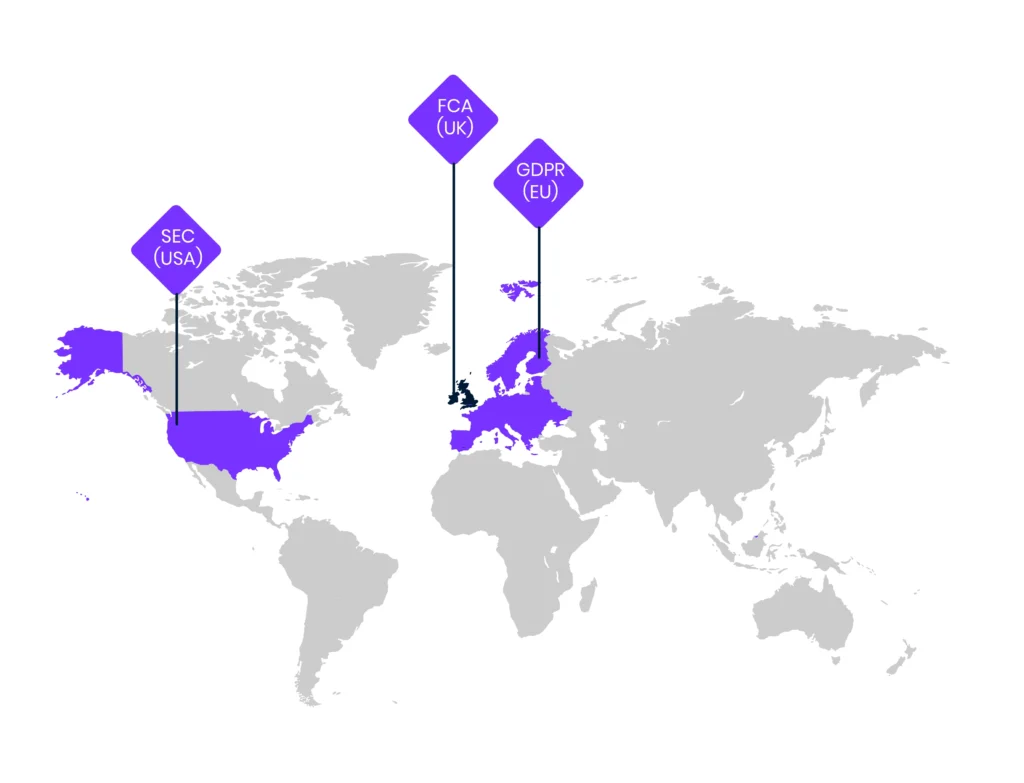
Regulators set the guardrails you must follow. In the US, the SEC watches expert calls for insider trading. In the UK, the FCA enforces its own market-fairness rules. Data privacy laws like GDPR control how you handle personal information across Europe.
Each region adds its own layer of checks, so you need a system that adapts in real time. Understanding expert network regulatory compliance requirements is essential for avoiding penalties across different jurisdictions. You must also manage material non-public information (or MNPI) by labeling it and blocking any talk that crosses the line. Automated filters and expert attestations work together to keep MNPI off the table. By baking in these expert network regulations, you avoid cross-border pitfalls and costly mistakes.
Core Components of an expert network compliance policy
Expert Screening & Conflict Checks
You confirm each expert’s identity through public records and ID checks. You map past employers against a blacklist to block conflicts of interest. Some experts even need written sign-off from their current employer before they join. Limits on the number of calls per expert per year cut risk of over-use and pressure. This vetting is the heart of expert network compliance. It keeps calls unbiased from day one.
Annual Terms & Conditions
Every expert re-signs a clear T&C document each year. These terms spell out their duty to avoid MNPI, respect NDAs, and follow local laws. Simple e-sign reminders make the process painless. This yearly handshake keeps your expert network policy fresh in everyone’s mind.
Interactive Training Modules
Short videos teach what counts as “confidential information” and how to flag red flags. Quizzes and real-world examples reinforce lessons. Experts must pass a test after each session to stay active on the platform. This hands-on learning turns rules into reflexes and shows clients you mean business.
Audit Trails & Record-Keeping
Log every consultation. Expert name, client name, topic, date, duration, fees, even the full transcript. Records live in a secure archive for at least three years. Spot-check reviews and exception reports catch anomalies early. When regulators come knocking, you have clear proof you did the work.
Continuous Improvement
Compliance is never “done.” Dedicated compliance pros review incidents monthly and update policies as laws change. They spot-check calls and keep an escalation log of any questions or rulings. This feedback loop makes your expert network guidelines stronger with every cycle.
Network Compliance Solutions: Taking a Strategic Approach
Effective network compliance solutions are a combination of technology, processes, and people. Modern compliance frameworks extend far beyond the checklist to build integrated systems to allow for seamless compliance.
Compliance Investment – Technology-Driven Compliance Tools
Automated screening algorithms screen every expert-client pairing before a match is made. The natural language processing scans project briefs and expert profiles for keywords of red flags associated with MNPI, conflict of interest, or restricted topics. Compliance teams can monitor consultations in real-time and be alerted to potential issues before they become serious. Strong expert network compliance processes and quality experts ensure that every interaction meets the highest standards.
Automated Risk Detection Systems
Machine learning models are used to analyse patterns in thousands of consultations and find anomalies. These systems identify experts who receive an abnormal amount of requests from competing clients, or identify topics that are skewing toward sensitive issues, and flag clients who have projects that are consistently close to regulatory limits. Predictive analytics can help compliance teams pin down their resources to the highest risk interactions.
Solutions for Real-Time Monitoring
Dashboard interfaces allow compliance officers to get instant views of ongoing consultations. Live alerts: They are used to notify teams, such as invalid questions left aside from finer topics, when conversation transcripts detect flagged terms. This sort of immediate feedback offers integration of intervention during calls as opposed to finding out things days later during manual reviews.
Integrated Compliance Platforms
Single-source platforms combine the vetting of experts, client onboarding, consultation booking, call monitoring, and audit trail management. Integration removes gaps that exist where compliance data reside in disconnected systems. Clients access transparency-reported information, compliance certificates, and audit summaries with self-service portals, whereas they impose a relatively lower administrative duty and offer higher trust levels.
Scalable Compliance Systems
As your network expansion increases, compliance processes must follow suit so as not to create bottlenecks. Modular network compliance solutions allow you to add new experts, clients, and jurisdictions without having to change the policy enforcement. Cloud-based systems guarantee that things are brought up-to-date on compliance rules across your entire system, and everyone is in step with those requirements.
Expert Network Policies in Action: The Compliance Lifecycle
From the moment an expert enters the network until long after the call ends, robust expert network policies guard every interaction.
For instance, when an expert is first onboarded, we verify identity through public records and personal ID checks. Their work history is mapped against our employer preference registry to block any conflicts of interest. Clients can even upload custom rules so their forbidden companies never appear in search results.
Before each call, experts answer targeted pre-screening questions and sign a brief attestation confirming they won’t share MNPI or breach confidentiality. Custom alerts notify compliance teams (or client-side oversight personnel) when an expert or topic hits a sensitive trigger.
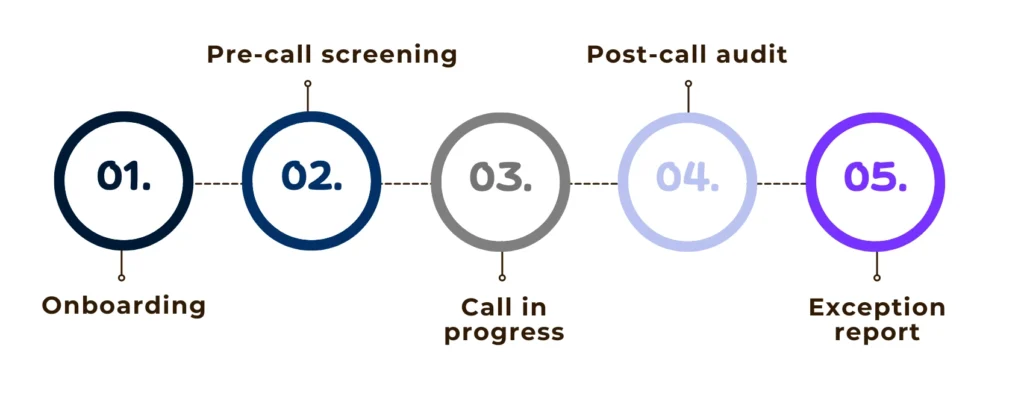
After the conversation wraps, every detail is logged. This includes expert name, client name, topic, date, duration, fees, and a full transcript. These records live in a secure archive for at least three years, ready for spot-checks, exception-report reviews, or regulator audits. A thorough network compliance review helps catch anomalies early, while monthly compliance tests and “top ten” exception reports add another layer of protection. Monthly compliance tests and “top ten” exception reports help catch anomalies early, while a whistleblower program ensures anyone can flag concerns anonymously.
This is an end-to-end cycle. From strict vetting and real-time engagement controls to exhaustive post-call monitoring. It brings our expert network compliance policy to life. It minimizes risk, speeds up issue resolution, and gives clients confidence that every call meets the highest ethical and legal standards.
Expert Network Guidelines: Best Practices for Day-to-Day
Conservative vs. Proactive Compliance Stance
A conservative stance blocks any topic that even hints at insider info. A proactive stance flags potential issues early and offers real-time guidance. Both approaches depend on clear expert network guidelines to work. Your choice shapes how experts and clients interact on the platform.
Transparency Checkpoints: What Clients See and What They Don’t
High-level compliance reports reassure clients that calls follow the rules. You keep detailed audit logs under wraps to protect your methods. This balance follows our expert network policies while building client trust.
Technology Levers: Algorithms, Portals, and Real-Time Flags
Smart filters spot banned terms before a session starts. A self-serve portal lets experts review policies on demand. Real-time flags alert your team to any risky behavior. These tools turn expert network regulations into seamless routines that run in the background. Understanding and implementing expert network regulatory compliance frameworks ensures your technology stack aligns with global standards.
Nexus’s Compliance Framework
Specialized Search Algorithm Prevents Risky Matches
Our algorithm vets project briefs against expert profiles in seconds. It blocks any pairing that could trigger MNPI concerns. This feature is central to our expert network compliance policy, ensuring every match meets your risk criteria.
Custom Compliance Workflows That Adapt to Client Rules
Clients upload their own rulebooks and NDAs. We map those requirements into expert workflows automatically. This flexibility reflects our commitment to strict expert network regulations and lets you scale without sacrificing control. Meeting expert network regulatory compliance requirements has never been more streamlined with our adaptive workflow system.
Yearly Training and Continuous Updates
Experts complete brief refreshers on key rules each year. We push instant updates whenever regulators change the playbook. This cycle cements our expert network guidelines in daily use and keeps everyone confident.
Conclusion
Strong compliance is a journey, not a one-time task. Vet experts carefully, enforce pre-call attestations, and keep detailed records. Use clear expert network policies in every step and update them based on feedback. Conducting a regular network compliance review ensures your processes stay current and effective. Partnering with compliance-first expert networks for regulated industries gives you the confidence that expert network compliance processes and quality experts are always prioritized.For more depth, check out our pillar post on compliance basics, download our policy template, or explore the Nexus expert research compliance overview.